

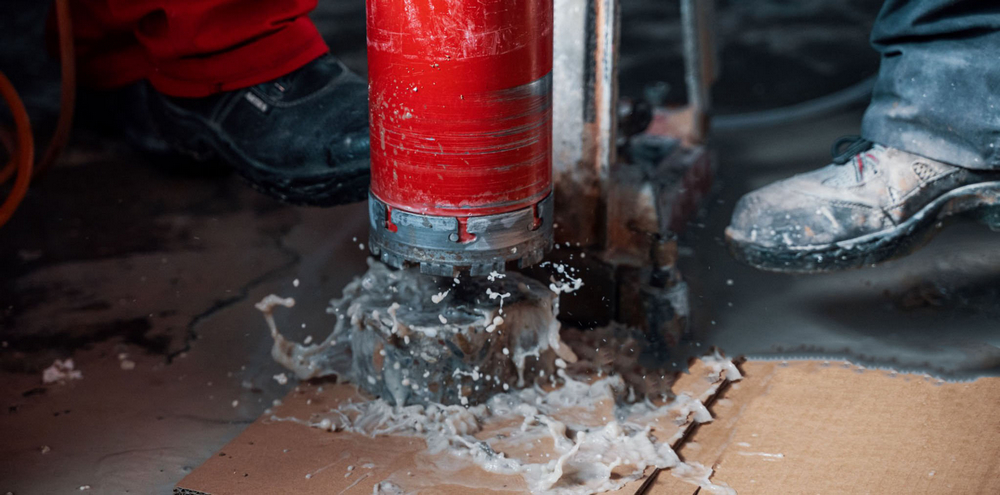
Wet (Water) drill bits and dry drill bits are two common drilling tools. The main differences are in the cooling method, applicable scenarios, design structure and use effect. Wet drills must be operated wet: they must be used with a water pump or water supply system. They are commonly used in building decoration (such as wall drilling) and stone processing.
Portable operation with dry drill: no external water source required, suitable for outdoor, high altitude or temporary operations (such as mounting brackets, circuit drilling)
The following is a specific comparison:
1. Cooling and lubrication methods
Different cooling methods
Water drill bit:
Depends on water flow cooling: Water needs to be continuously supplied during drilling, and the water flow takes away the heat and lubricates the drill bit to prevent high temperature from causing the drill bit to wear or material cracking.Reduce dust: Water can suppress dust flying, suitable for indoor or confined spaces.
Dry drill bit:
No need for coolant: Heat is dissipated through the drill bit material (such as carbide) or special design (such as heat sink), but it is easy to overheat after long-term use.
More dust: Dust collection equipment or protective measures are required.
2. Applicable materials
Water drill bit:
Hard and brittle materials: such as concrete, stone, tile, glass, etc., high temperature can easily cause the material to crack or the drill bit to burn.Deep hole operation: water cooling can extend the continuous operation time.
Dry drill bit:
Metal, wood, plastic: heating is relatively controllable, or the material itself is resistant to high temperature (such as metal chips are easy to discharge).
Short-term operation: suitable for fast drilling, but requires intermittent cooling.
3. Design features
Water drill bit:
Hollow structure: There is a water supply channel in the center, and some models have water outlet holes on the side wall (such as diamond thin-wall drill bits).
Wear-resistant coating: Often plated with diamond or tungsten carbide, suitable for high friction environments.
Dry drill bit:
Solid design: No water supply channel, may have heat dissipation grooves or spiral chip removal grooves (such as twist drills).
Various materials: high-speed steel (HSS), cobalt alloy, etc.
| Type | Advantages | Disadvantages |
| Wet Drill Bits | Good heat dissipation, long life, less dust | Requires water supply equipment, complicated operation, high cost |
| Dry Drill Bits | ready to use, low cost Easy to overheat | large dust, may damage materials |
Note:
Improper use may cause damage to the drill bit (for example, a dry drill bit will quickly become blunt if it is forced into concrete). Be sure to choose the matching tool according to the material.


