


Whether you are working on an AI data center, electrical substation, solar farm, wind power project, tunnel, or industrial facility, understanding the differences between Single, Trefoil, and Quad Cable Cleats will help you choose the most suitable solution.
This guide explains the advantages, applications, and selection criteria for each cable cleat type while highlighting the importance of IEC 61914 compliance and 316L stainless steel construction.
Why Cable Cleats Matter
Power cables can experience tremendous electromagnetic forces during a short circuit. Without proper restraint, cables may whip violently, collide with adjacent cables, or damage cable trays and supporting structures.
A high-quality cable cleat helps to:
- Secure cables during normal operation
- Resist electrodynamic forces during short circuits
- Maintain cable spacing
- Protect cable insulation
- Extend cable service life
- Improve personnel and equipment safety
For critical infrastructure, cable cleats should always comply with IEC 61914, the international standard for cable cleats used with power installations.
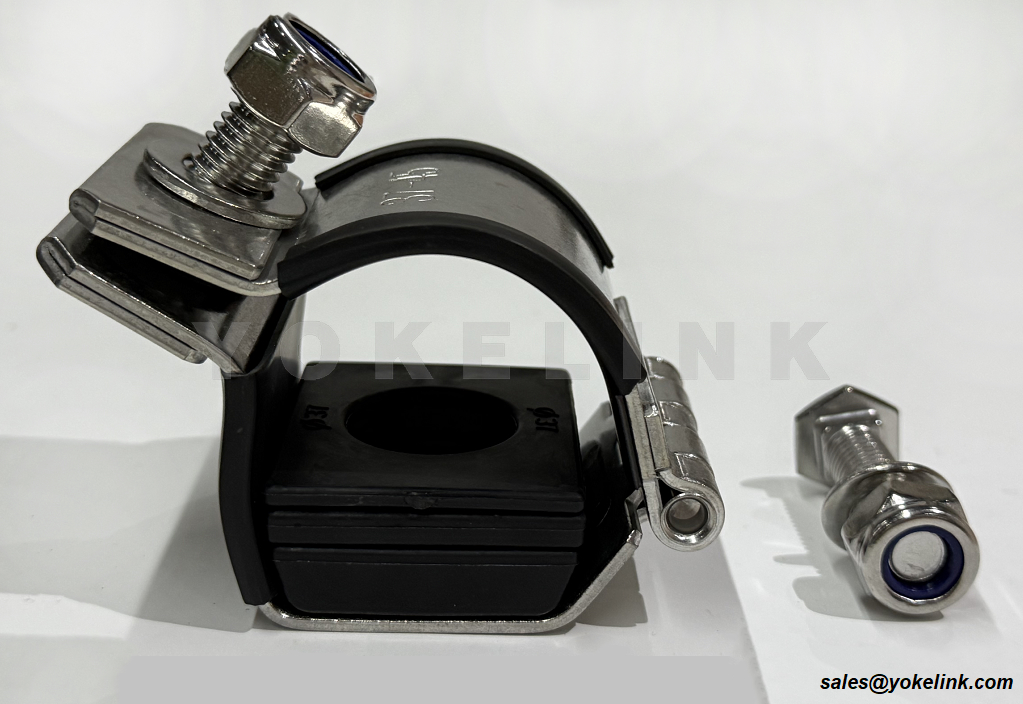
Single Cable Cleats
Best For Individual Cable Installations
Single cable cleats are designed to secure one cable independently.
Typical Applications
- Utility substations
- Battery energy storage systems (BESS)
- Solar power plants
- Wind farms
- Industrial manufacturing
- Commercial buildings
Advantages
- Flexible cable routing
- Easy cable replacement
- Suitable for different cable sizes
- Simple installation
Single cable cleats are the preferred choice whenever each cable follows its own cable route.
Trefoil Cable Cleats
Best For Three Single-Core Power Cables
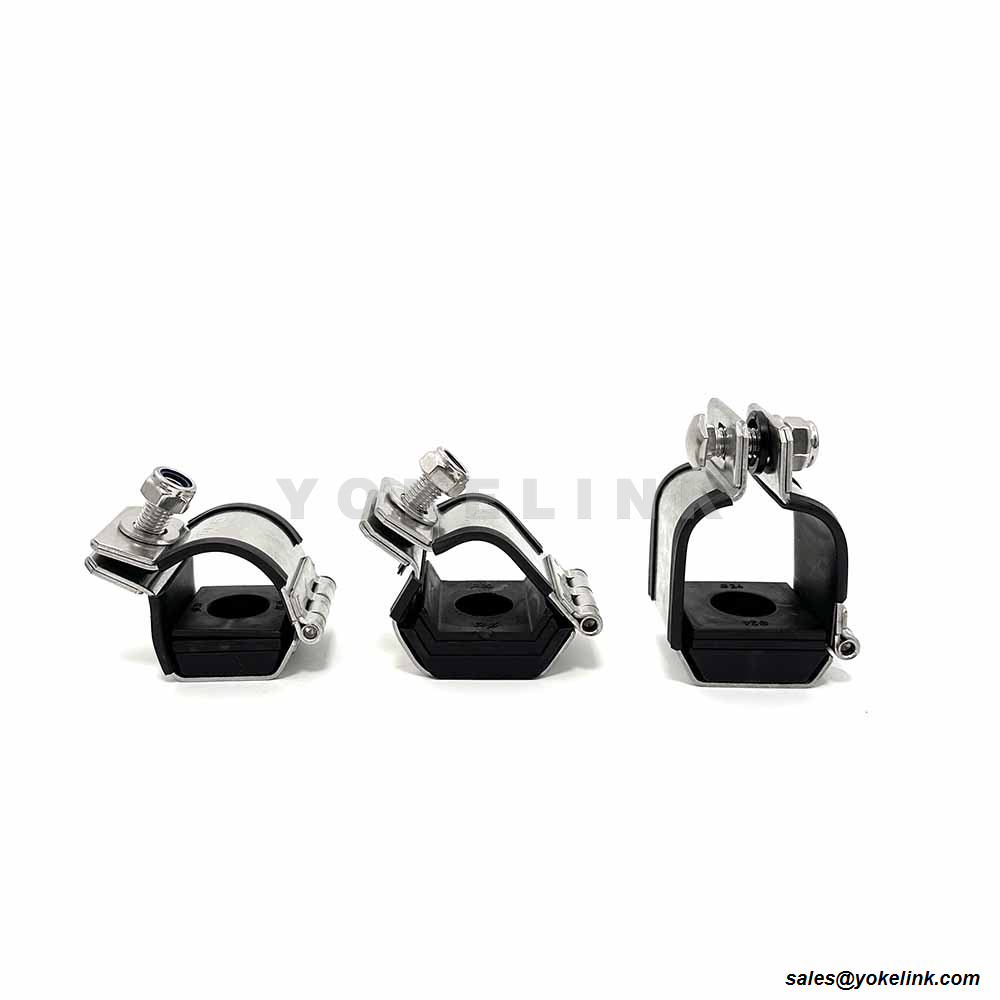 Trefoil cable cleats are designed specifically for three single-core cables arranged in a triangular formation.
This configuration naturally balances magnetic fields and significantly reduces mechanical stress during operation.
Ideal Applications
- AI Data Centers
- Hyperscale Data Centers
- Medium-voltage distribution
- High-voltage substations
- Railway power systems
- Offshore platforms
Key Benefits
- Excellent cable stability
- Reduced electromagnetic forces
- Compact installation
- Improved short-circuit performance
- Better heat dissipation
Trefoil arrangements have become the industry standard for medium- and high-voltage power distribution.
Quad Cable Cleats
Best For Four Cable Configurations
Quad cable cleats are designed for installations requiring four parallel cables arranged in a square pattern.
They provide secure cable positioning while maintaining consistent spacing between all conductors.
Common Applications
- Industrial power systems
- Utility distribution networks
- Cable tunnels
- Renewable energy projects
- Petrochemical plants
- Infrastructure developments
Benefits
- Secure four-cable support
- Stable cable spacing
- High mechanical strength
- Easy installation
- Excellent fault restraint
Why 316L Stainless Steel Is the Preferred Material
Material selection is just as important as cable arrangement.
Compared with galvanized steel or standard stainless steel, 316L stainless steel offers superior corrosion resistance and durability.
Advantages
- Outstanding corrosion resistance
- Excellent performance in coastal environments
- Suitable for offshore installations
- Resistant to chemicals and humidity
- Long service life
- Minimal maintenance
- Attractive appearance for exposed installations
For mission-critical facilities such as data centers and substations, 316L stainless steel is widely regarded as the best long-term solution.
The Importance of IEC 61914 Certification
Not every cable clamp is suitable for power cable restraint.
IEC 61914 specifies strict requirements covering:
- Mechanical strength
- Material performance
- Installation requirements
- Fire resistance
- Cable restraint capability
- Short-circuit withstand performance
Choosing an IEC 61914 certified cable cleat ensures the product has been designed for demanding electrical environments rather than general cable support applications.

Choosing the Right Cable Cleat
When selecting a cable cleat, consider the following factors:
Cable Configuration
Choose a Single, Trefoil, or Quad design based on the number and arrangement of power cables.
Cable Outside Diameter
Always select a cable cleat that matches the cable's outside diameter (OD) to ensure secure restraint without damaging the cable jacket.
Installation Environment
Consider exposure to moisture, salt spray, chemicals, UV radiation, or extreme temperatures. For harsh environments, 316L stainless steel provides the highest level of corrosion resistance.
Short-Circuit Requirements
Projects with high fault current levels require cable cleats capable of withstanding significant electrodynamic forces. Products tested in accordance with IEC 61914 offer greater confidence in demanding applications.
Mounting System
Ensure the cable cleat is compatible with your chosen support structure, such as cable trays, cable ladders, strut channels, or custom brackets.
Why Choose YOKELINK?
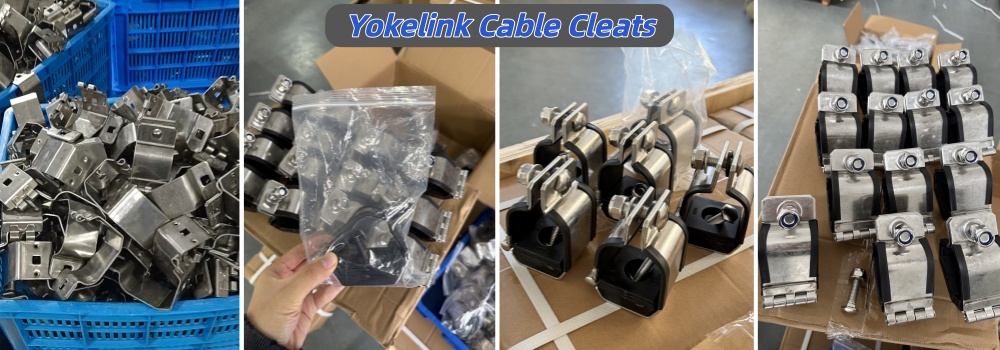
YOKELINK manufactures premium Single, Trefoil, and Quad Cable Cleats engineered for demanding power infrastructure projects worldwide.
Features
- Manufactured in accordance with IEC 61914
- Successfully passed short-circuit testing
- Premium 316L stainless steel construction
- Available in Single, Trefoil, and Quad configurations
- Wide cable diameter range
- Compatible with cable trays, ladders, and support brackets
- Suitable for indoor and outdoor installations
- Trusted by customers in North America, South America, Southeast Asia, Europe, and the Middle East
Frequently Asked Questions
Which cable cleat is best for a data center?
Trefoil cable cleats are commonly used for three single-core power cables in AI and hyperscale data centers because they provide excellent stability and short-circuit restraint.
Why use 316L stainless steel instead of galvanized steel?
316L stainless steel offers superior corrosion resistance, making it ideal for humid, coastal, offshore, and industrial environments while requiring less maintenance over its service life.
Are IEC 61914 cable cleats required?
Many engineering specifications reference IEC 61914 because it establishes internationally recognized requirements for mechanical performance and short-circuit restraint of cable cleats.
Can one cable cleat fit different cable sizes?
Most cable cleats are designed for a specific cable diameter range. Selecting the correct size ensures proper restraint without damaging the cable insulation.
Can cable cleats be installed outdoors?
Yes. When manufactured from 316L stainless steel, cable cleats are suitable for outdoor installations, including substations, renewable energy facilities, tunnels, and marine environments.
Conclusion
Choosing the right cable cleat depends on your cable arrangement, installation environment, and project requirements. Single, Trefoil, and Quad cable cleats each serve different applications, but all play a vital role in protecting power cables during normal operation and short-circuit events. By selecting IEC 61914 compliant, 316L stainless steel cable cleats, engineers can improve system safety, extend cable service life, and ensure reliable performance in critical power infrastructure for years to come.


